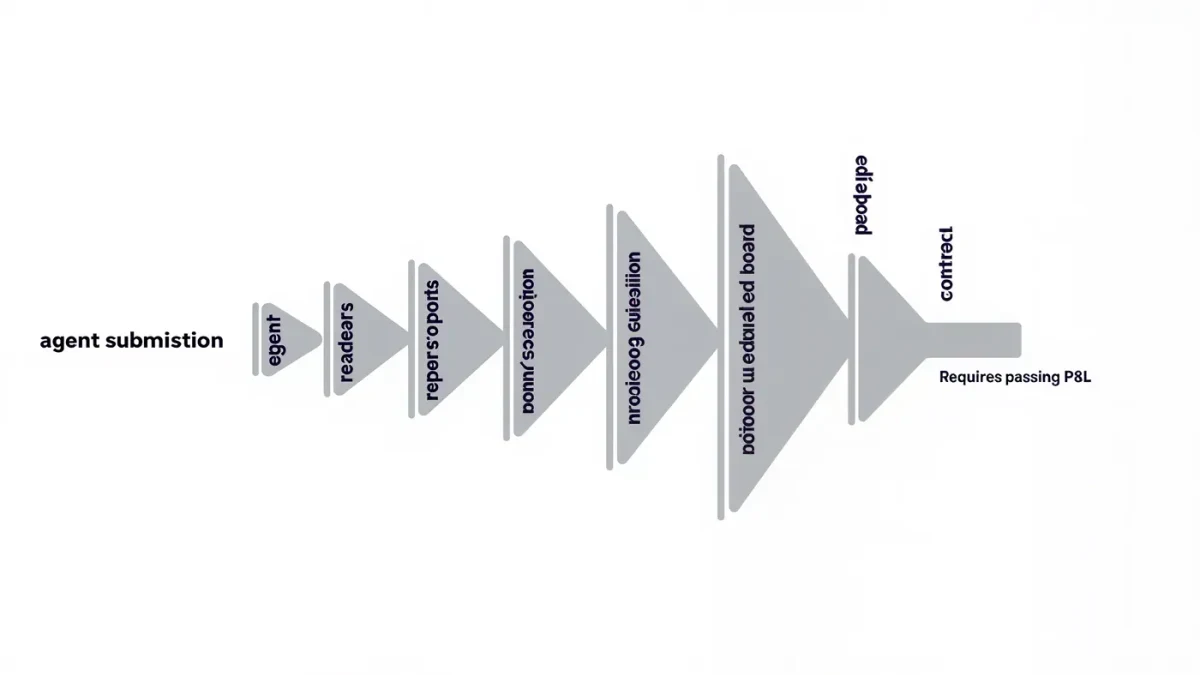

A companion diagnostic is an in vitro diagnostic or imaging tool that "provides information that is essential for the safe and effective use of a corresponding therapeutic product," in FDA's definition. Biomarkers decide which patients get which therapy; the regulated test makes that decision reproducible, and FDA expects test and drug to be authorized together.
What is a biomarker, and what makes it a companion diagnostic?
A biomarker is a measurable biological characteristic — a gene variant, a protein level, a mutation signature — that indicates a biological state or a likely response to intervention. Most biomarkers stay research tools. A subset crosses into clinical use, and within that subset the companion diagnostic is the strictest category: a test whose result is required, per the therapeutic's labeling, before a patient receives a specific drug.
FDA draws the boundary in its own words. On the agency's companion diagnostics page, such tests can "identify patients who are most likely to benefit from a particular therapeutic product," identify patients at risk of serious side effects, or "monitor response to treatment" so therapy can be adjusted. The agency adds a caution that frames the entire field: if the diagnostic test result is inaccurate, the treatment decision based on it may not be optimal. The diagnostic is not an accessory to the drug; it is part of the drug's safe use.
The distinction matters commercially as well as clinically. A laboratory test used to guide treatment without a formal link to a drug's label is a laboratory-developed test operating under different oversight. A companion diagnostic listed by FDA is tied to a named therapeutic product, and its performance is part of the evidence package that supported that product's approval.
Why does FDA expect drugs and tests to be approved together?
The co-approval principle dates to FDA's 2014 guidance on in vitro companion diagnostic devices. The guidance states its purpose is to "clarify that, in most circumstances, an IVD companion diagnostic device and its corresponding therapeutic product should be approved or cleared contemporaneously by FDA for the use indicated in the therapeutic product labeling," and to "explain the need for FDA oversight of IVD companion diagnostic devices."
The logic is evidentiary. A clinical trial that used a test to select its population demonstrates the drug's efficacy only in the patients the test identified. If a different test with different performance characteristics is used at approval, the trial evidence no longer transfers cleanly: patients the second test flags may not resemble the patients the first test enrolled. Co-development is therefore not a regulatory preference but a consequence of how the evidence was generated.
That is why the developmental path runs in parallel. The test developer must lock down analytically validated performance — sensitivity, specificity, reproducibility of the assay — while the drug developer runs the pivotal trial using that same assay on enrolled patients. FDA's guidance document on in vitro companion diagnostics frames the device review and the drug review as linked files that should arrive at decision points together.
How does a test reach the authorized list?
The end state is inclusion in FDA's public tables of authorized companion diagnostics. The agency's list presents a table of FDA-authorized companion diagnostics covering in vitro and imaging tools, in which use of an IVD companion diagnostic "is stipulated in the instructions for use in the labeling of the diagnostic device," with each listed test tied to a specific therapeutic product or products. A second table covers tests with group labeling indications for sets of oncology drugs.
The list is dominated by oncology because that is where biomarker-stratified evidence first became standard, but it is not limited to it. The pattern of the entries is consistent: an analyte, a platform, a named therapeutic, and an indication in which the test-drug pairing was studied. When a drug's label names a test, pharmacies and treatment centers must be able to access that test, which is why companion diagnostic availability is part of a therapeutic's commercial footprint rather than an afterthought.
What does the pathway look like from biomarker to authorized test?
The development sequence, simplified:
- Discovery: a biomarker is associated with response or risk in research cohorts.
- Assay development: a reproducible test is built around the biomarker and analytically validated.
- Co-development: the drug's pivotal trial uses the locked assay to select or stratify patients.
- Parallel review: the device submission and the drug application are reviewed on aligned timelines.
- Contemporaneous authorization: the test is cleared or approved with, or ahead of, the drug's approval.
- Listing and labeling: the pairing appears in FDA's companion diagnostic tables and in the therapeutic's label.
Group labeling has added a wrinkle: where a class of drugs shares a biomarker-defined population, a single test can carry indications for multiple therapeutics, and FDA's list now separates those group-labeled entries from the single-pairing table. For diagnostic companies, that shifts value toward platforms that can serve an expanding set of pairings; for drug developers, it means the test landscape around a target can evolve after approval. What does not change is the core rule: the biomarker defines the population, and the authorized diagnostic is the document that proves a given patient belongs to it.
What happens when the test is wrong or unavailable?
The system's dependence on the test is its fragility. A false negative on a companion diagnostic excludes a patient from a therapy that would likely have worked; a false positive admits a patient to a treatment whose trial evidence never covered people like them. FDA's warning that an inaccurate result makes the treatment decision non-optimal is the field's operating risk in one sentence, which is why analytical validation — reproducibility, limit of detection, interference studies — occupies so much of the diagnostic developer's file.
Access is the second-order problem. When a label names a specific authorized test, laboratories running other platforms may not report results that qualify the patient for the drug, and health systems in regions without the test effectively lack access to the therapy it gates. Group labeling mitigates this by permitting a validated test to serve a class of drugs, and multi-analyte panels extend it further by scoring many biomarkers from one specimen, but the underlying coupling of drug access to test availability remains a structural feature of precision medicine.
For developers, the lesson learned across two decades of co-approvals is that the diagnostic is a parallel product, not a subroutine. Its clinical performance claims, its manufacturing controls, and its post-market surveillance are each separately regulated, and a drug launch can be gated by a test that is late.
How does a biomarker graduate from association to action?
The evidentiary climb is steep and staged. An association in retrospective samples — a correlation between a marker and outcome — is the cheapest and weakest form of evidence. Prospective-retrospective validation, in which a locked assay is applied to stored specimens from a completed trial, strengthens the case because the treatment context is known. The decisive step is prospective use: a trial in which the test itself assigns or stratifies patients, generating the evidence that supports a labeled pairing.
Each stage has a failure mode. Retrospective associations overfit their cohorts; archival specimens degrade; and a biomarker that predicted response in one drug class may not transfer to another targeting the same pathway. The companion diagnostic framework forces the discipline: by the time a test appears in FDA's tables, its clinical utility has been demonstrated in the population that will actually use it, not merely inferred from a convenient sample.