A drug candidate reaches the clinic through an Investigational New Drug application, the exemption that lets a sponsor ship an unapproved drug to investigators. Per FDA, an IND is needed once a sponsor that has screened a molecule for "pharmacological activity and acute toxicity potential in animals" wants to test it in humans, after a 30-day review window.
What must preclinical testing establish?
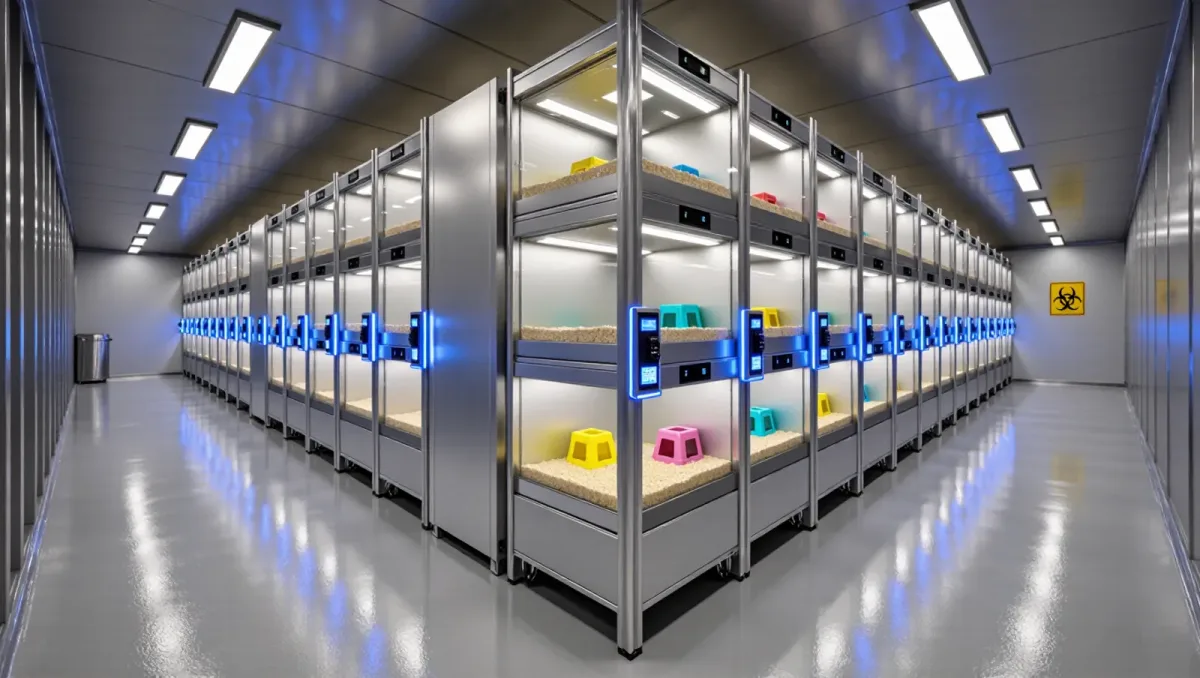
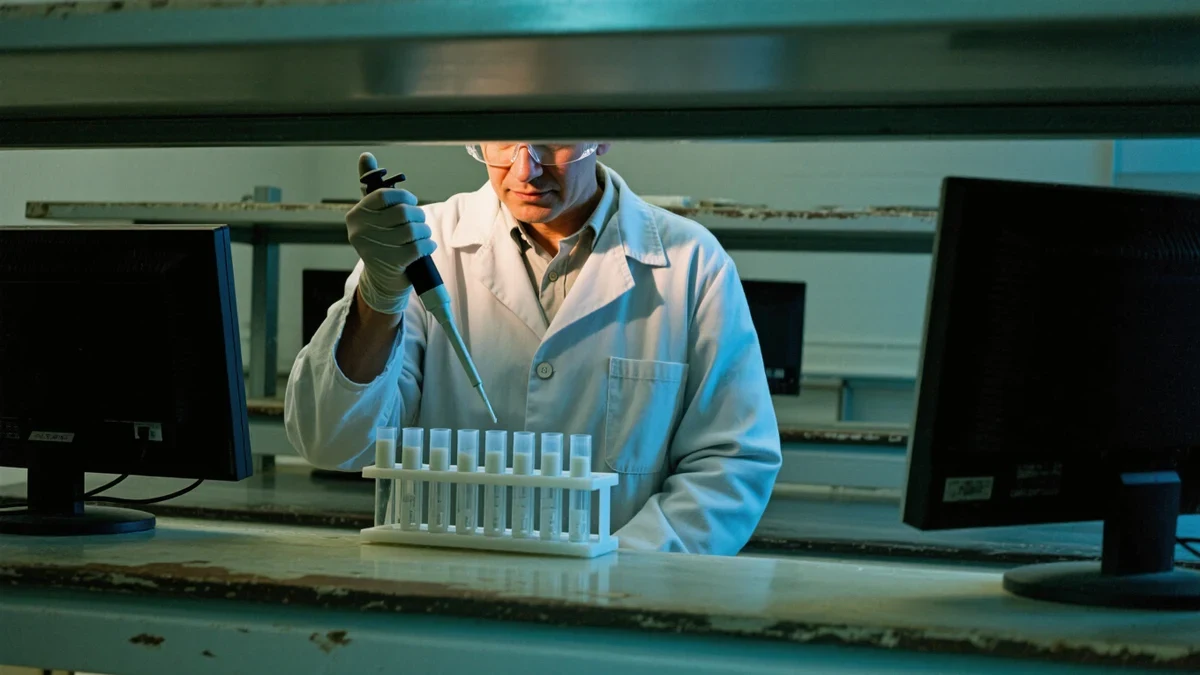
Preclinical research exists to answer one question: is this molecule safe enough to give to a person? FDA's drug development guide states that "before testing a drug in people, researchers must find out whether it has the potential to cause serious harm, also called toxicity," and that preclinical research takes two forms, in vitro and in vivo studies. While "preclinical studies are not very large," the agency notes they must still supply "detailed information on dosing and toxicity levels."
The standard package is codified in harmonized guidance: pharmacology studies establishing mechanism and activity, pharmacokinetic and toxicology studies in animal species, and genotoxicity and safety pharmacology screens. The point is not to prove the drug works in people — no animal model does that — but to define a safe human starting dose and the organs to watch. The gap between animal efficacy and human efficacy is the transition's permanent problem: researchers evaluate preclinical results, per FDA, "to determine whether human trials are warranted," which is a judgment, not a guarantee.
Attrition is the base rate of this transition. Most candidates that look active at the bench do not become medicines, and the failures cluster exactly here — toxicity that emerges at human exposure, pharmacokinetics that do not translate, or efficacy that vanishes outside the model. The IND process is engineered around that reality: it gates entry into humans on a documented safety rationale rather than on scientific enthusiasm.
What does the IND application actually contain?
The IND is both a legal exemption and a scientific dossier. Federal law requires an approved marketing application before a drug crosses state lines; as FDA's IND page explains, "the IND is the means through which the sponsor technically obtains this exemption from the FDA," because sponsors need to ship investigational drugs to investigators in multiple states.
Three components recur across submissions. First, animal pharmacology and toxicology data, built from the preclinical package, supporting that the drug is reasonably safe for initial human testing. Second, manufacturing information establishing that the drug substance is chemically stable, adequately characterized, and produced consistently — a requirement that surprises many first-time sponsors, because a clinical batch is a manufacturing milestone as much as a scientific one. Third, the clinical protocol: dosing plan, safety monitoring, and the informed consent materials for the first-in-human study.
Once submitted, the clock is fixed. The sponsor must wait 30 calendar days before starting clinical trials, during which FDA reviews the safety basis and can place a clinical hold if the information is insufficient or the risk unreasonable. No news at day 30 is permission to proceed.
How is the clinical phase structured once the IND is effective?
Clinical development then proceeds in phases whose scale is standardized enough that FDA publishes the numbers. Per the agency's clinical research overview, Phase 1 involves "20 to 100 healthy volunteers or people with the disease/condition" over several months focusing on "safety and dosage"; Phase 2 enrolls "up to several hundred people with the disease/condition" over several months to two years examining "efficacy and side effects"; and Phase 3 involves "300 to 3,000 volunteers who have the disease or condition" for one to four years with the purpose of "efficacy and monitoring of adverse reactions."
The first-in-human study inside Phase 1 carries the transition's specific risks, which is why dose escalation designs, sentinel dosing, and intensive monitoring are standard. FDA's preclinical overview frames the sequence plainly: preclinical findings are evaluated to determine whether human trials are warranted, and only then does the IND process begin.
What is the full path from candidate to approved drug?
The ordered process, as FDA structures it:
- Discovery and screening: a candidate molecule is identified and tested for pharmacological activity and acute toxicity potential in animals.
- Preclinical package: in vitro and in vivo studies supply detailed dosing and toxicity information.
- IND submission: pharmacology, manufacturing, and protocol data go to FDA.
- 30-day review: FDA evaluates safety or places a clinical hold; the IND becomes effective.
- Phase 1: 20-100 subjects, safety and dosage.
- Phase 2: up to several hundred patients, efficacy and side effects.
- Phase 3: 300-3,000 patients, confirmatory efficacy and adverse reaction monitoring.
- Marketing application: the clinical data set supports approval review.
The transition is where the money and the attrition concentrate, and its documents — the IND, the 30-day clock, the phase table — are the industry's shared map of that territory. Everything before it is hypothesis; the IND is the moment the hypothesis first meets a human being, under supervision, with a safety file that says why that is defensible.
Why do so few candidates survive the crossing?
The transition's attrition is structural, not accidental. Animal models approximate human disease to a degree, and efficacy measured in a model does not price in human pharmacokinetics, human metabolism, or the immunology of a person rather than a mouse. Toxicity that was invisible at animal exposures can surface at human ones. The IND's 30-day review and the dose-escalation designs of Phase 1 exist precisely because the crossing is where the unknowns concentrate.
History also disciplines the design. Severe first-in-human reactions in past trials drove the modern conventions of sentinel dosing, slow escalation, and intensive monitoring in early cohorts. A first-in-human protocol is therefore a conservative document by construction: small cohorts, conservative starting doses derived from the preclinical no-observed-adverse-effect level, and stopping rules that pause the study on signals.
For companies, the practical planning point is that the IND is a manufacturing and regulatory milestone as much as a scientific one. Programs are routinely delayed not by weak biology but by a chemistry and manufacturing file that is not ready — stability data, impurity characterization, or batch comparability. The clinic opens when the whole package, not just the pharmacology, is ready.
What changes when the IND becomes effective?
The transition does not end at first dose; it changes ownership. Before the IND, the program is run by discovery and preclinical scientists; after it, a clinical operations apparatus takes over — sites, investigators, monitoring, safety reporting, and the regulatory obligations that attach to an open IND. Adverse events must be reported on defined timelines, protocol amendments go through review, and the annual report keeps FDA current on the program's trajectory.
The scientific center of gravity shifts as well. Phase 1 asks a narrow question — is this safe at escalating doses, and what does the body do to the drug — while the efficacy hypothesis that motivated the program waits for Phase 2 evidence in patients. Managing that handoff cleanly, keeping the preclinical team's mechanistic insight attached to the clinical team's data, is an organizational discipline that separates programs that learn from programs that merely proceed.
What does the IND not do?
The IND opens a door; it does not promise what walks through it. An effective IND authorizes human testing of a specific protocol, at specific doses, in a specific population — no more. It is not an endorsement of the candidate's efficacy, not a commitment to future approval, and not a transferable permission: protocol changes require amendments, and a new indication means a new development program. Reading an IND as a verdict is a category error the system is designed to prevent.