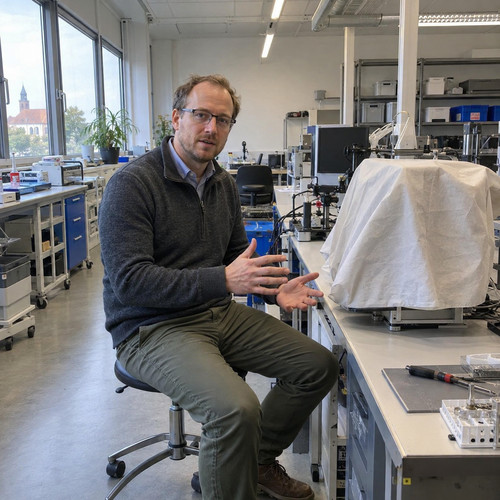
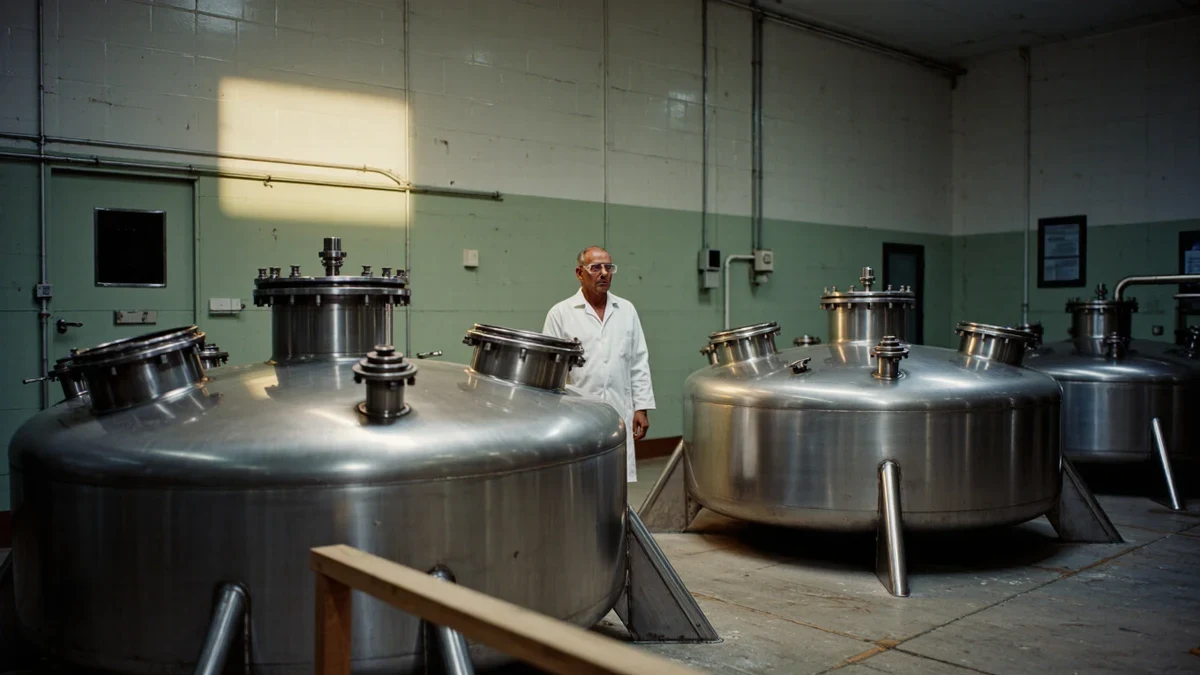
The University of Minnesota has quadrupled its biomanufacturing capability with a new facility on its St. Paul campus, per the university's August 14, 2026 announcement. Minnesota Biomanufacturing Services, formerly the Biotechnology Resource Center, is five times larger than its predecessor space and began full operations this spring, serving academic researchers and companies from startups to the Fortune 500.
What does the new facility actually do?
The center runs microbial and fungal fermentation to develop products across the pharmaceutical, veterinary medicine, agricultural, industrial biotechnology, and food sectors, per the university's announcement. It is set up to test processes and produce biological materials at scales ranging from milliliters and micrograms to hectoliters and kilograms. The expansion added upgrades to purification, support, analytics, and quality control, allowing multiple large-scale projects to run simultaneously with faster production timelines.
The service model is the point. Director Marcus Schicklberger said the new facility greatly expands the center's capacity to provide end-to-end bioprocess development with rigorous control and optimization at every stage, per the announcement. That fills the scale-up gap between bench discovery and contract manufacturing that small companies often cannot bridge on their own, and it does so inside a university infrastructure built on decades of the institution's bioprocessing expertise.
Why does capacity like this matter now?
The opening lands in a market where adaptability is replacing raw volume as the scarce asset. MilliporeSigma's global head of process solutions, Sebastian Arana, argued in a June 25, 2026 PharmTech analysis that the winners of the next decade will be companies that build adaptability into their manufacturing ecosystems, describing the future as modular manufacturing, digital-enabled, and platform-based. Shrinking clinical timelines and diverse pipelines mean one production ecosystem now has to flex across modalities, per the same piece.
A university-scale facility is a small player against commercial CDMO networks, but its role is different. It sits deliberately in the middle of the development curve, where a company with a promising strain needs fermentations at scales no academic lab can run and no commercial plant will schedule cheaply. Facilities positioned at that interface increasingly function as on-ramps to the bigger contract infrastructure, and Minnesota's framing of the site as the start of a broader St. Paul biotech corridor reflects that strategy.
What happens next?
The ribbon cutting and grand opening mark the public launch of a facility that has been operating since spring, per the announcement. For industry readers, the practical questions are utilization and access terms: which client projects the center takes, at what scale, and on what timeline. Those operational details are set in individual service agreements with the university and are not yet disclosed in the announcement.